It is 6:15 on a Tuesday. The 30 tonne excavator that was meant to strip the pad has shut itself down halfway through the first bucket. Two truck drivers are parked up waiting on a load that is not coming, the pipe crew behind the excavation is sitting on its hands, and your supervisor is already asking what the plan is.
A stopped machine is never one person standing around, which is how a single failure at the start of a shift costs a project thousands before lunch. After years of emergency callouts across Sydney and the Gold Coast, we can tell you the gap between a two hour fix and a two week rebuild is almost never the fault itself. It is what the site did before the technician arrived.
The First Five Minutes: Make It Safe Before You Diagnose
Nobody should be hunting for the fault until the machine and the ground around it are safe.
- Lower the attachment and get the machine stable. Hydraulics bleed down. A bucket held up by a system that has just lost pressure will come down eventually, and it will not warn you first.
- Park brake on, isolator off, keys out.
- Tag it out. Put something physical on the controls. The most common way a small failure becomes a big one is a well-meaning second person having a go at starting it while the first walks off to make the call.
- Clear the area if the machine is on a slope, over a trench, or near live traffic. A machine that cannot move under its own power in one of those positions is a recovery job, not a repair job.
The Most Expensive Thing You Can Do Is Try It Again
When a machine shuts itself down, it usually did so to protect something more expensive than whatever failed. Cranking it over to see if it does it twice is how a manageable repair becomes a rebuild. The four we see most often:
- Low oil pressure or high temperature shutdowns. If the engine stopped itself on a pressure or temperature fault, the bearings may already be marginal. Restarting and running it even briefly is what takes a job from a sender to a bottom end rebuild.
- Overheating. Do not pull the radiator cap on a hot engine, and do not tip cold water into a hot block. Cracked heads are a self-inflicted injury and we still see them regularly.
- A burst hydraulic hose. A blown hose on a 30 tonne machine can empty the tank in under a minute, and a pump left running dry destroys itself in seconds. We have replaced pumps that would have been a hose and an hour of labour if the machine had been shut down ten seconds earlier.
- A thrown track. The instinct is to drive it and walk the track back on. Do not. You will bend the idler, damage the final drive, or roll the track further off the frame.
Five Minutes of Triage That Halves Your Response Time
Once it is safe and off, gather what decides whether the technician arrives with the right part or just arrives to have a look.
- Make, model, serial number and hour meter. The serial matters more than people expect. Manufacturers change components partway through a model run, so after hours, with trade counters shut, the serial is what lets a technician pull the right part from van stock instead of guessing.
- Photograph the fault codes rather than paraphrasing them. "It said something about hydraulics" is not diagnostic information. A photo of the display is.
- Note what the machine was doing when it stopped. Under load, tracking, idling, cold start, mid-swing. This narrows the fault more than any other detail.
- Describe the fluid. Colour, where it is coming from, roughly how much. Hydraulic oil, engine oil, coolant and diesel each point at a different system.
- Take three photos. A wide shot showing where the machine sits and how a truck would reach it, a close shot of the failure, and the data plate.
- Be honest about access. Gate number, inductions, lighting, and whether a truck can get within a few metres or the machine is down a trench behind other plant.
- Know who can approve the spend. This is the delay we see most often, and it is not parts. At 7pm nobody on site can approve the repair, so a technician who is ready to work waits on a phone call.
Send those through when you call. A technician who leaves the yard knowing the machine, the fault and the access is a different proposition to one who knows only that an excavator is broken somewhere in Sydney.
Contain the Oil Before It Becomes a Different Problem
A burst hose can put a couple of hundred litres of hydraulic oil on the ground. Get absorbent or a bund around it immediately, keep it away from drains and any watercourse, and tell the site environmental representative early rather than after the fact. A contained spill is a clean-up. One that reaches stormwater is a notification, an investigation, and a cost that dwarfs the repair.
Repair It Where It Sits, or Recover It
Not every breakdown should be fixed in the field. Four questions decide it:
- Can the work be done safely where the machine stands? Slope, trench, traffic and overhead services rule out field repair no matter how simple the fault.
- Is the machine blocking the job? One parked out of the way can wait. One in the only haul road cannot.
- Field fault or workshop fault? Hoses, cylinders, electrical, cooling systems, tracks and most structural cracking are field work. Engine internals, transmissions and final drives usually are not.
- What does a float cost against what the site loses? Recovery is not cheap, but neither is three days of a crew working around an obstruction.
When It Is the Crusher, the Whole Chain Stops
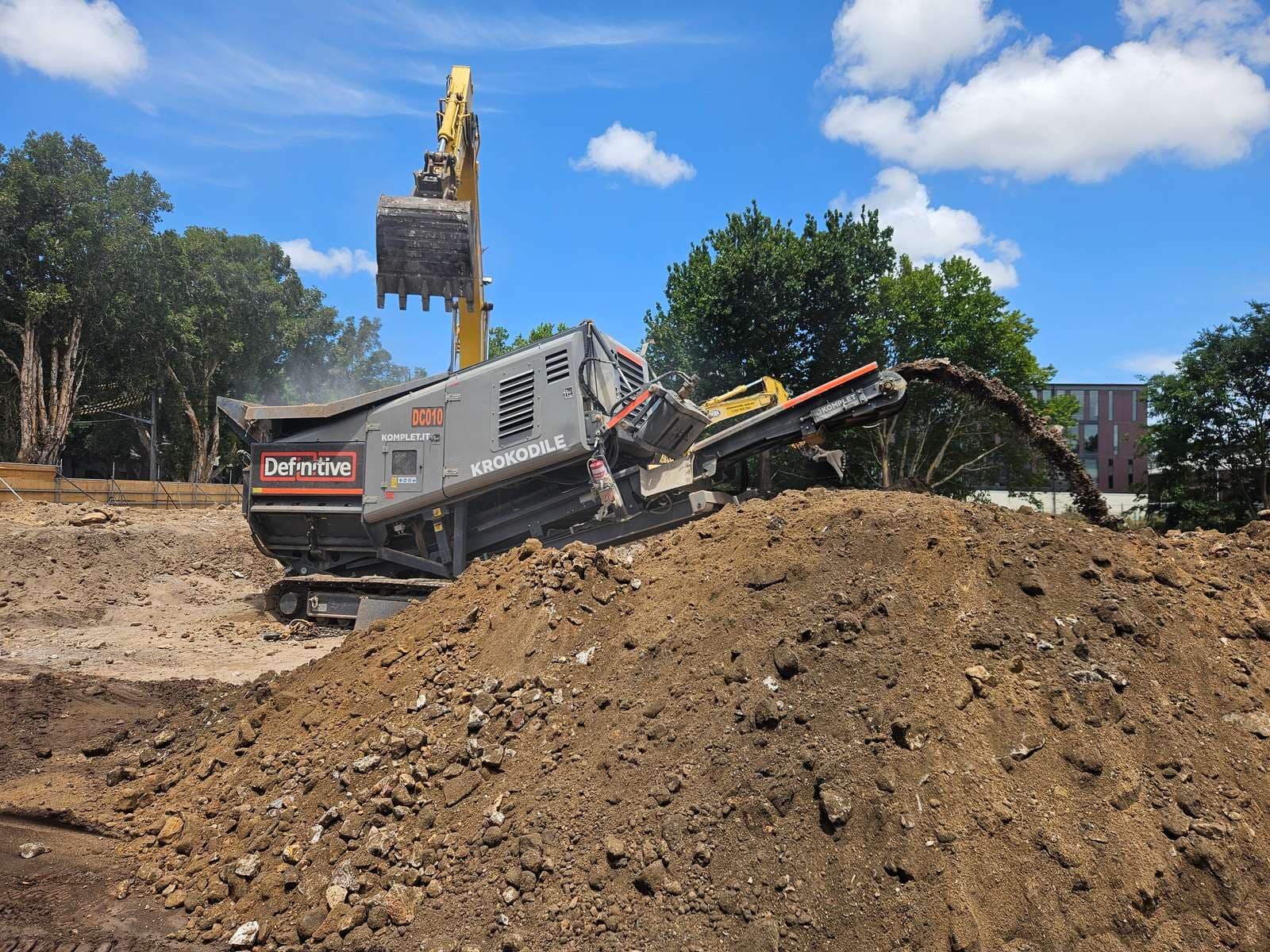
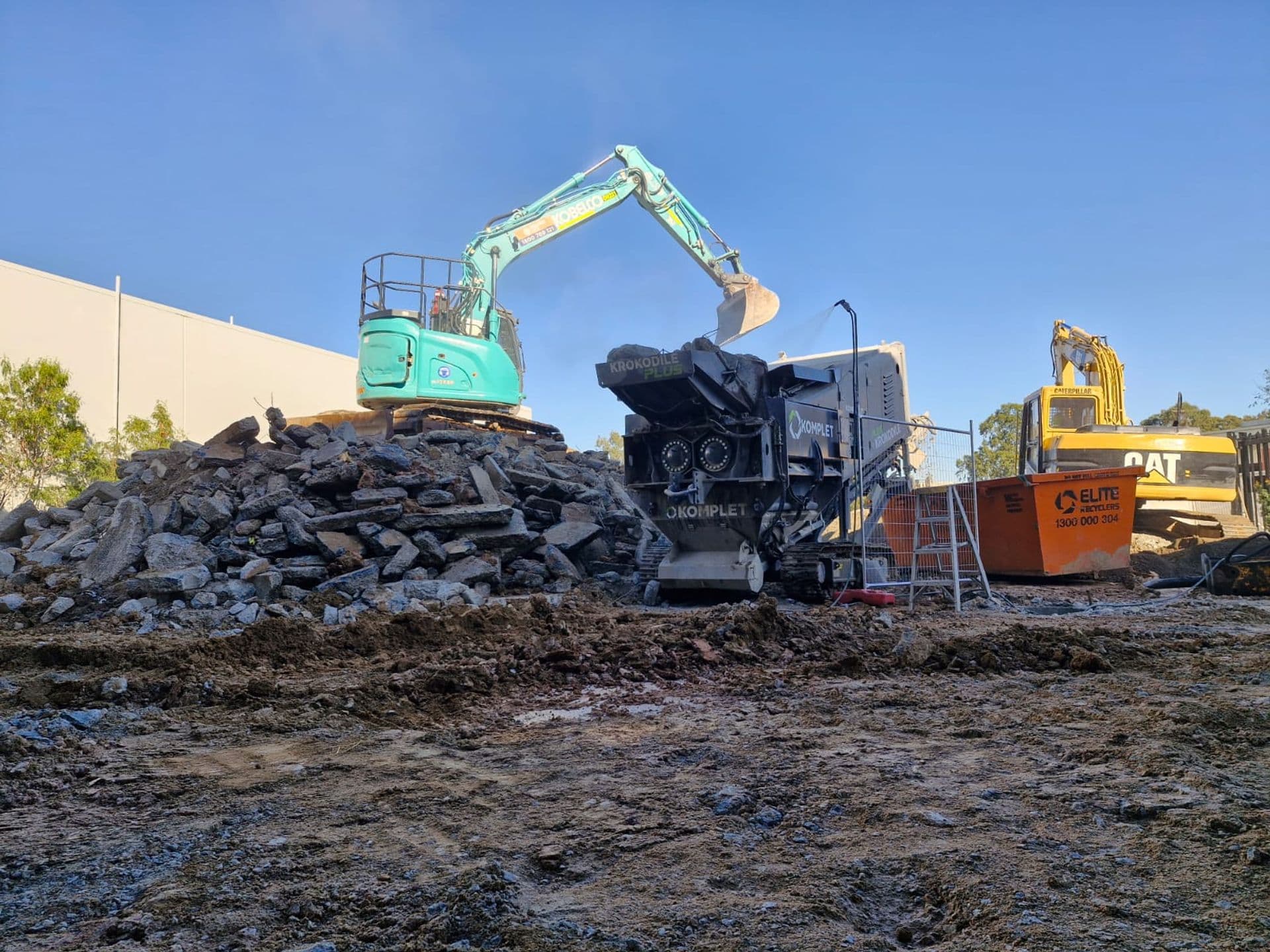
When a crusher goes down, the excavator feeding it stops, the loader stacking product stops, and the trucks carting it stop with them. On our crusher hire, servicing and breakdown cover sit inside the rate rather than on top, which is why the figure from the crushing cost calculator is not comparable to running a machine you own, where an unplanned failure lands entirely on you.
Common Questions
How do I get emergency replacement parts for a machine after hours?
Have the make, model and serial number ready first, because that is what determines which part fits. From there it is usually stock already on the service vehicle, an after-hours contact at a supplier, or a part pulled from another machine to get you through the shift. Without the serial, none of those move quickly.
Should I try starting the machine again before the technician arrives?
No. If the machine shut itself down, assume it had a reason and leave it off. The exception is if it has to be moved for safety, and even then, call first so someone can tell you whether moving it will make the damage worse.
What does an emergency callout cost?
A callout fee plus hourly labour, quoted before a technician is dispatched, with parts at cost plus and receipted. After-hours and weekend rates are higher, which is standard across the industry. Sites running several machines are usually better off on a maintenance agreement with priority response, which lowers the per callout cost and gives you a response time you can budget against.
Do you attend breakdowns outside Sydney and the Gold Coast?
Yes. Our two bases are Sydney and the Gold Coast, and we regularly attend jobs through the Central Coast, Newcastle, the Hunter and the Illawarra, as well as into South East Queensland. On remote or long-running projects, permanent onsite coverage often beats repeat callouts.
Machine Down Right Now?
Call 0401 343 691. You will speak to someone who knows machinery and get a realistic arrival time rather than a comforting one. If we can talk you through something on the phone that saves you a callout, we will do that instead. What we cover is on the 24/7 breakdown support page, and our guide on what to expect when equipment fails onsite covers response windows and what the mobile workshops carry.
And if the machine is still running but something does not feel right, call anyway. Every expensive job we attend started as a cheap one somebody hoped would sort itself out.