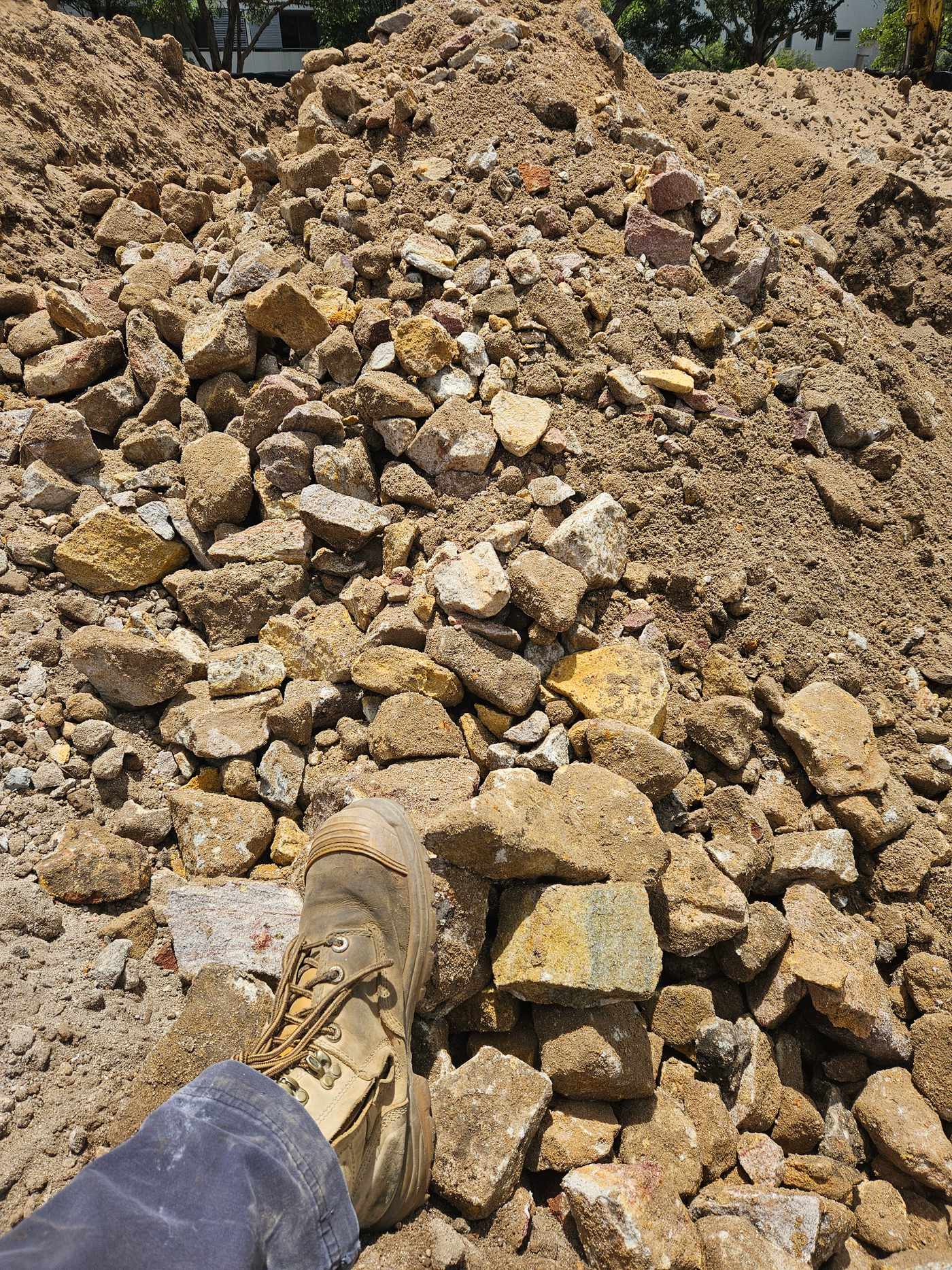
Choosing a crusher for your construction project is not as simple as picking the biggest one and hoping for the best. The right machine depends on what you are crushing, how fine you need the output, how much material you have, and the physical constraints of your site. Get it wrong and you end up with the wrong product size, half the throughput you expected, or a machine that is too big to fit where you need it.
At Definitive Contracting, we operate a fleet of mobile crushers and screeners across Sydney and the Gold Coast. We have processed everything from reinforced concrete slabs to natural rock to recycled asphalt. This guide breaks down the main crusher types, what each one does best, and how to match the right machine to your project.
The Three Main Crusher Types
Jaw Crushers
A jaw crusher uses two heavy steel plates (jaws) to compress and break material. One jaw is fixed, the other moves back and forth. Material falls in the top, gets crushed between the jaws, and drops out the bottom at a reduced size.
Best for:
- Hard, abrasive materials: natural rock, granite, basalt, heavy reinforced concrete
- Primary crushing (reducing large pieces down to a manageable size)
- High-strength concrete and heavily reinforced structures
Output characteristics:
- Produces angular, chunky material
- Typical output size range: 40mm to 150mm (adjustable via the jaw gap setting)
- Not ideal for producing fine, well-graded material in a single pass
Throughput: Varies by machine size. Our Komplet Krokodile jaw crusher processes 30 to 60 tonnes per hour depending on the feed material and output size setting.
Jaw crushers are the workhorses. If you are not sure what you need, a jaw crusher is usually the safe starting point because it handles the widest range of materials and feed sizes.
Impact Crushers
An impact crusher uses rapidly spinning rotors with blow bars to throw material against impact plates. Instead of squeezing the material (like a jaw), it shatters it through high-speed impact. This produces a very different end product.
Best for:
- Concrete (especially lightly reinforced or unreinforced)
- Asphalt and road base recycling
- Brick and masonry
- Softer rock types (limestone, sandstone)
Output characteristics:
- Produces a more cubical, well-graded product
- Better particle shape than jaw crushers
- Can produce material suitable for road base (Class 3 or Class 4 equivalent) in a single pass
- Typical output size range: 20mm to 75mm
Throughput: Our Komplet Impaktor processes 20 to 50 tonnes per hour. Impact crushers generally have slightly lower throughput than jaw crushers of the same size, but the output quality is higher.
If your primary goal is to produce usable aggregate, road base, or drainage material from concrete or masonry waste, an impact crusher is usually the better choice. The end product packs better, compacts better, and meets specification more easily.
Screeners (Trommel and Vibrating)
Strictly speaking, a screener is not a crusher. It separates material by size rather than reducing it. But screeners are often used alongside crushers, and in some cases, they are all you need.
Best for:
- Separating topsoil from rubble on demolition sites
- Grading crushed material into different size fractions
- Removing contaminants (timber, plastic, metal) from mixed demolition waste before crushing
- Processing natural soil that contains rocks and debris
When you need a screener instead of (or alongside) a crusher:
- If your material is already the right size but mixed with soil, fines, or contaminants
- If you need multiple size fractions from crushed material (for example, 20mm minus and 40mm minus from the same stockpile)
- If you are processing soil with embedded rocks or debris
How to Match Crusher to Material
Here is a practical decision matrix based on the most common materials we see on construction and demolition sites in Sydney:
Reinforced Concrete (Heavy Reo)
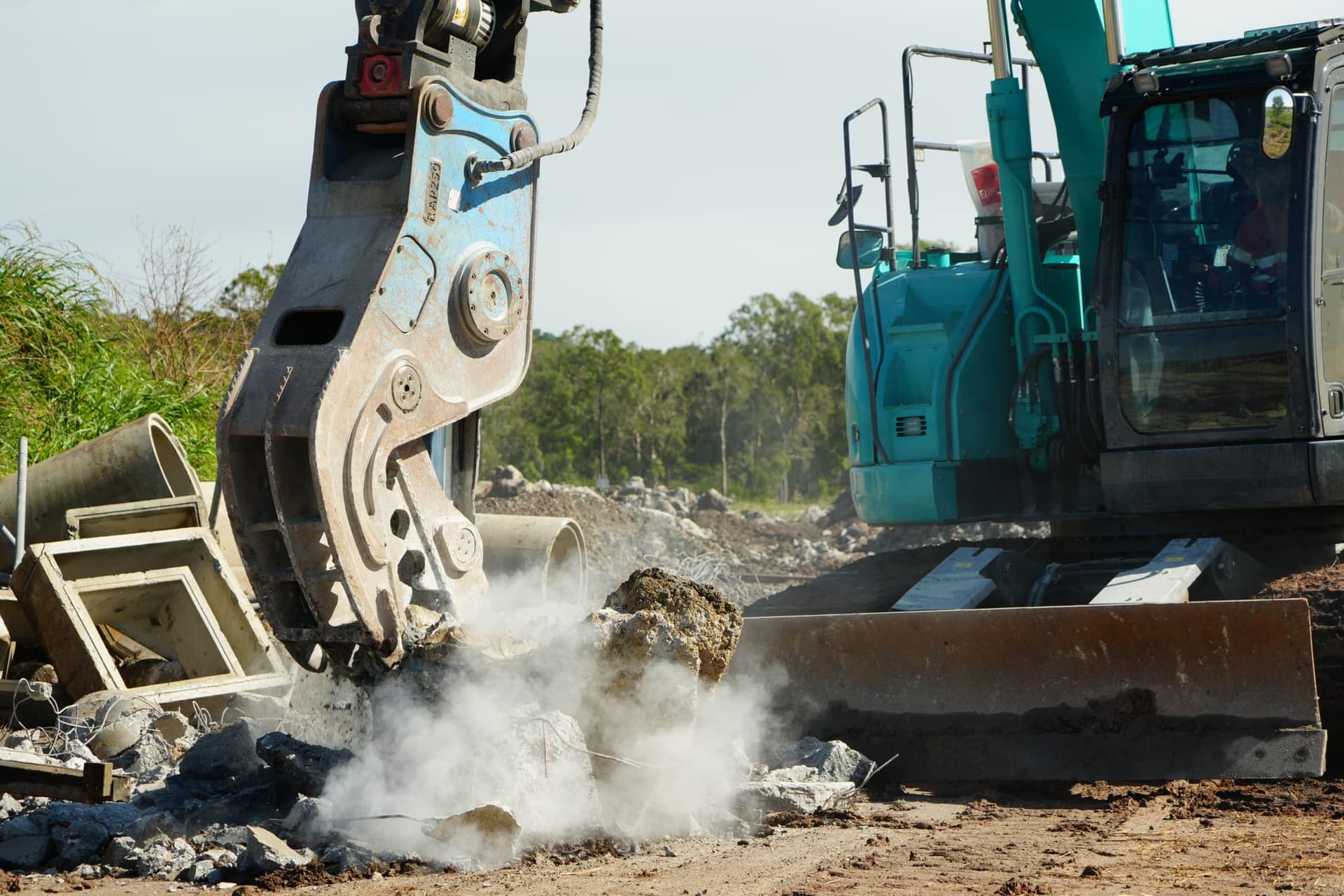
Go with a jaw crusher. Heavy reinforcement (N20 bars and above, mesh, structural steel embedments) will damage an impact crusher's blow bars quickly and expensively. A jaw crusher handles reo far better, and the steel can be separated with a magnet after crushing.
Concrete (Light Reo or Unreinforced)
Either crusher works, but an impact crusher produces better output for reuse as road base or fill. If you are mainly looking for a clean, graded product, the impact crusher is the pick.
Asphalt
Impact crusher. Asphalt is relatively soft, and the impact action produces a consistent RAP (Recycled Asphalt Pavement) product that can be reused in new road works or as a base course.
Natural Rock (Hard)
Jaw crusher for primary crushing. If you need a finer or more consistent product, run it through the jaw first and then through the impact crusher (two-stage crushing). This is common on road construction projects.
Brick and Masonry
Impact crusher. Brick crushes easily under impact and produces a clean recycled aggregate product. A jaw crusher works too, but the output will be chunkier.
Mixed Demolition Waste
Screen first to remove contaminants, then crush. Sending mixed waste (with timber, plastic, and metal) directly into a crusher causes jams, damages components, and produces a contaminated output that is not usable.
Site Conditions to Consider
Beyond the material, your site conditions will influence which crusher is practical:
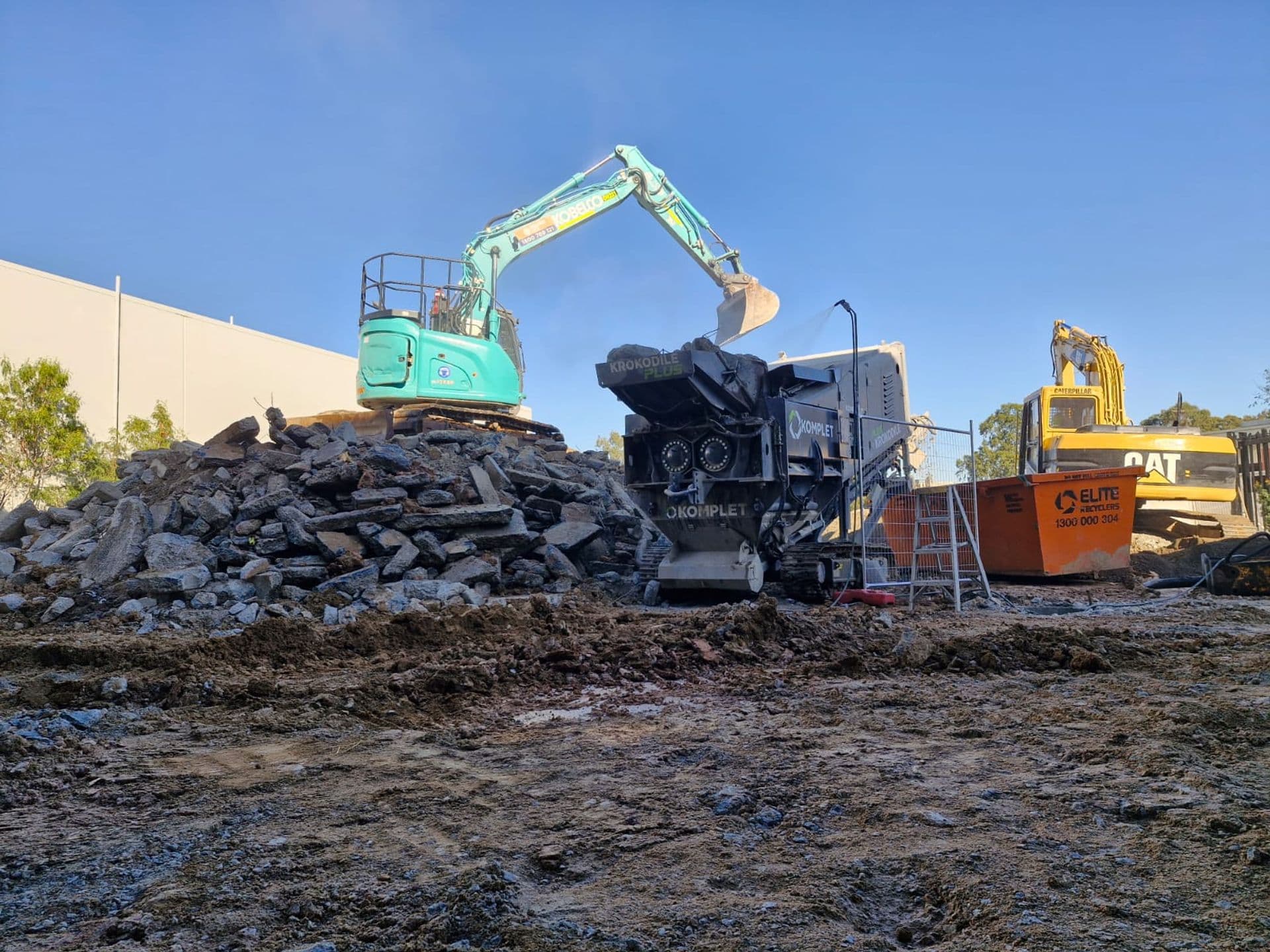
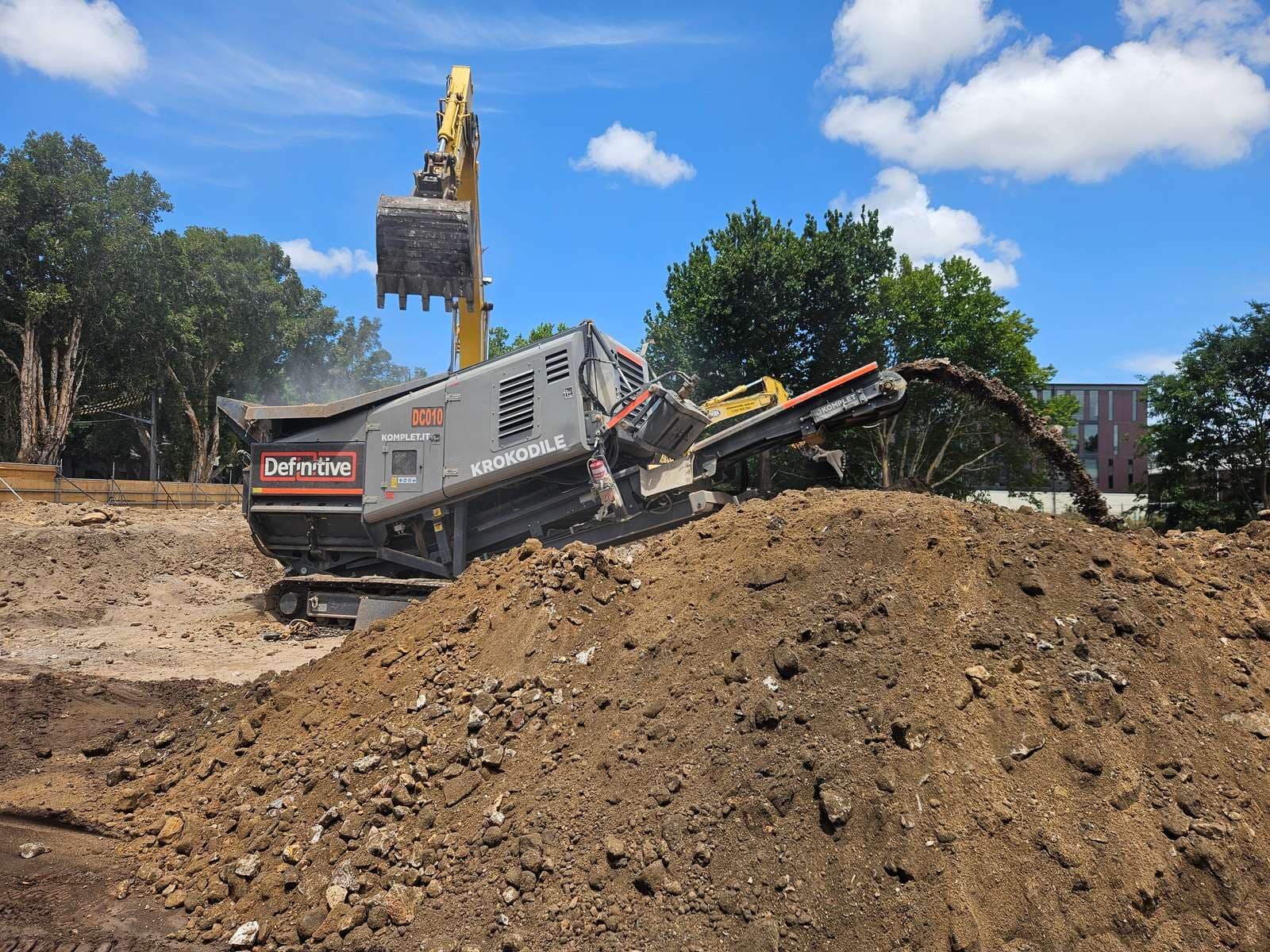
- Space: Our compact Komplet machines have a much smaller footprint than full-size tracked crushers. If you are on a tight inner-city Sydney site, this matters. The Krokodile jaw crusher is roughly 7m long and 2.5m wide in operating position.
- Noise restrictions: Impact crushers are louder than jaw crushers. If you are near residential areas with noise limits, check with your site manager or council before committing to an impact crusher.
- Dust: Both crusher types produce dust. We run water suppression on our machines, but sites with strict dust management plans (hospitals, schools, food processing nearby) may need additional controls.
- Power source: Our mobile crushers are diesel-powered and self-contained. No external power supply needed. But check your site's emissions or idling restrictions if applicable.
- Access: The crusher arrives on a float trailer. You need enough room for the truck and float to enter, unload, and exit. Minimum access width is typically 3.5 metres.
Volume and Duration: When Hire Makes Sense
Crusher hire is the right option for most construction projects because the volumes do not justify owning the machine. Here is a rough guide:
- Under 200 tonnes: Consider whether it is cheaper to just truck it. Small volumes may not justify the mobilisation cost of a crusher. We will be honest with you about this.
- 200 to 1,000 tonnes: The sweet spot for short-term crusher hire. A few days to a week of crushing, significant savings over trucking and disposal.
- 1,000 to 5,000 tonnes: Multi-week hire. At this volume, the savings are substantial and the crusher is paying for itself many times over compared to the alternative.
- 5,000+ tonnes: Long-term hire or contract crushing. We can provide the crusher, operator, and maintenance on an ongoing basis for large civil or demolition projects.
Definitive's Crusher Fleet
We currently operate the following machines, all available for hire with operator across Sydney and the Gold Coast:
- Komplet Krokodile (Jaw Crusher): Compact, powerful, handles the toughest materials including heavily reinforced concrete and natural rock. Adjustable output size from 40mm to 150mm. Processes 30 to 60 tonnes per hour.
- Komplet Impaktor (Impact Crusher): Produces high-quality, well-graded aggregate suitable for road base and engineered fill. Output size 20mm to 75mm. Processes 20 to 50 tonnes per hour.
Both machines are fully mobile, diesel-powered, and come with an experienced operator. We handle all maintenance and servicing. You supply the excavator to feed the crusher (13 tonne minimum).
Still Not Sure? Ask Us
If you have a project coming up and you are not sure which crusher is the right fit, call us on 0401 343 691. We will ask about your material, volumes, site access, and what you want to do with the end product. From there, we will recommend the right machine and give you a quote.
We would rather put the right crusher on your site the first time than swap machines halfway through because the first one was not suited to the job. Check out our crusher hire page for more detail on our fleet and pricing structure, or use the cost calculator to get a quick estimate.